
Prostate & urinary wellness · Indonesia
Prostate & Urinary Wellness
A plain reference to the ingredients that turn up most often in men's prostate and urinary supplements — what each one is, how it is dosed on a label, and where the honest limits of the evidence sit.
Where a label stops and a decision starts
Prostate and urinary formulas are sold in Indonesia in three shapes: single-herb capsules, blended prostate complexes, and general men's multivitamins with one or two prostate ingredients added. The bottle rarely tells you which of those you are holding. The label does, once you know what to look for.
This page walks through the ingredients that appear most often, the dose ranges you will actually see printed, and the difference between an ingredient with a solid research record, one with a long traditional history and thin published data, and one that is simply a reasonable nutrient to keep topped up. It is educational reading, not a diagnosis and not a recommendation to self-treat anything.
If you are already comparing specific products, the ingredient guide and the comparison page go deeper on formulation and pricing. What follows here is the groundwork.
Extract type and ratio — a 10:1 extract at 320 mg is not the same as 320 mg of dried fruit powder.
Doses printed per capsule are often half of what the front of the bottle implies per day.
Zinc has an upper limit. Stacking two men's formulas can push you past it without you noticing.
A short formula with clear numbers usually beats a long one where half the entries sit below any studied dose.
The four families you will meet
Botanical extracts, minerals, seed oils and the fillers that hold them together. Nearly every prostate formula on a shelf is some arrangement of these four.
Botanical extracts
Concentrated plant material standardised to a marker compound — fatty acids in saw palmetto, sterols in nettle root, pygeum bark extract. The marker matters more than the plant name.
Listed with a ratio (e.g. 10:1) or a standardisation percentage, plus the extract weight in mg.
Minerals
Zinc and selenium are the two that recur. Both are nutrients the body needs in small amounts rather than herbs taken for a specific effect, and both have a real upper intake level.
Given in mg (or mcg for selenium) with the salt named — picolinate, citrate, glycinate, selenomethionine.
Seed oils and powders
Pumpkin seed oil, flaxseed and pygeum-derived oils. These are closer to food than to a concentrated extract, which is why the gram-level doses look large next to a 320 mg capsule of something else.
Often blended into one "prostate oil complex" line with a combined gram figure instead of each oil's own number.
Carriers and fillers
Rice flour, magnesium stearate, silicon dioxide, gelatine or vegetable cellulose for the shell. They carry no prostate claim, but their volume tells you how much of the capsule is actually active material.
Usually grouped under "other ingredients" below the supplement facts panel, in descending order by weight.
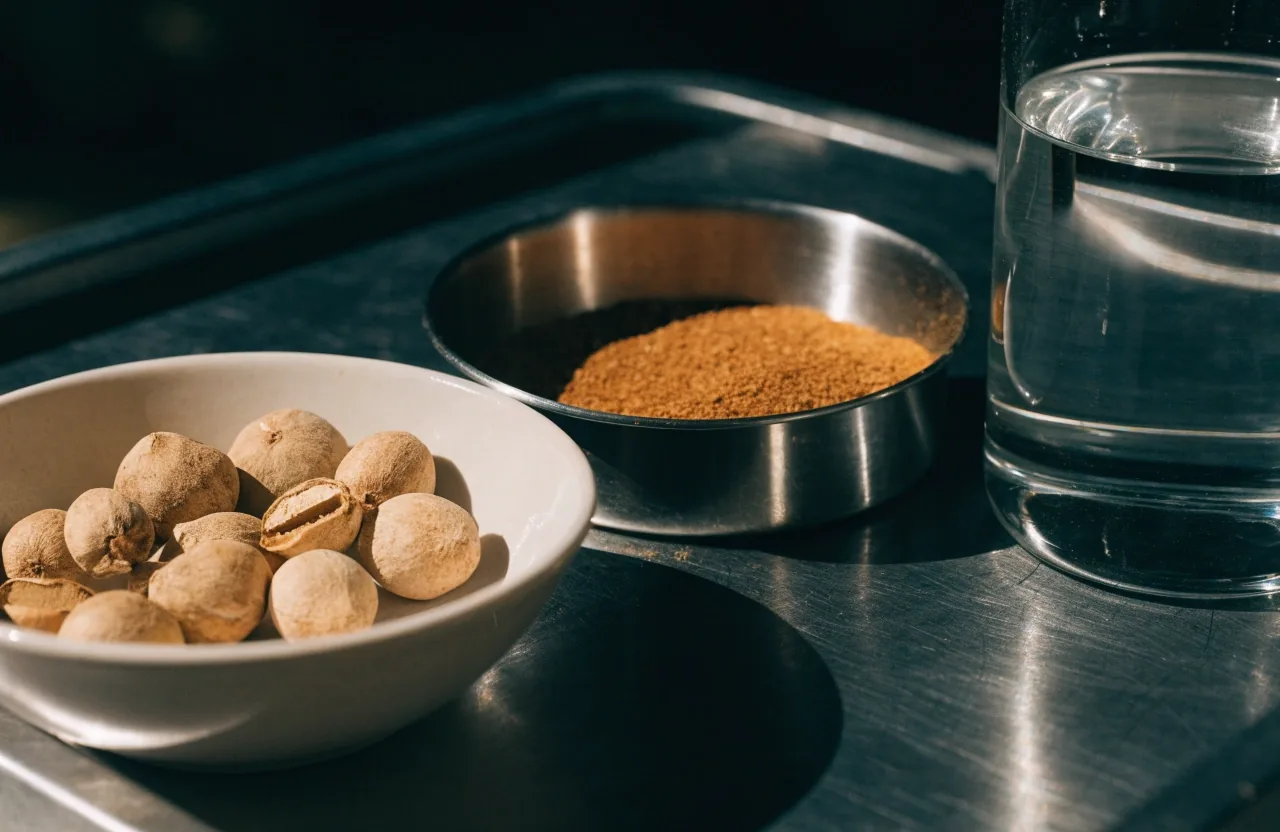
Whole fruit and extract are not interchangeable measures
Read the dose, not the bottle.
A formula can name six ingredients and still deliver a studied amount of none of them. The supplement facts panel is where that becomes visible, and it takes about ninety seconds to check once you know the order to read it in.
Saw palmetto, zinc and the supporting cast
Of everything sold for prostate and urinary wellness, saw palmetto has the largest published record — and the record is genuinely mixed. Several trials reported changes in symptom scores; others found nothing distinguishable from placebo. That is the honest state of it, and it is worth knowing before you pay a premium for a high-ratio extract.
Zinc behaves differently. It is a nutrient with a defined requirement, and a deficiency is a real thing that shows up in a blood test. Supplementing a deficiency is a different act from taking a herb hoping for an effect, and the two should not be marketed the same way.
Nettle root
300–600 mg / dayFrequently stacked with saw palmetto rather than sold alone, which makes its own contribution hard to isolate. Most published work looks at the combination, not the single root.
Pygeum
50–100 mg / dayBark extract with a long traditional use. Sourcing is worth a second look, because wild-harvesting pressure on the tree has led several suppliers to move to cultivated or substitute material over the years.
Selenium
55–200 mcg / dayA trace mineral where the gap between the useful range and the excessive range is narrow. Look at the mcg figure on the label and compare it to any multivitamin you already take.
Pumpkin seed
500–1000 mg / dayFood-adjacent and widely tolerated. When it has been studied, it is usually inside a multi-oil blend, so the isolated effect of pumpkin seed itself remains unclear.
Where the record is thicker
Ingredients with multiple published trials, even when those trials disagree with each other. You can read the disagreement and make up your own mind, which is more than you can do with a formula that has never been studied as a whole.
- Saw palmetto fruit extract
- Zinc, as a nutrient requirement
- Selenium, within a narrow range
- Pumpkin seed oil blends
Where it thins out
Ingredients carried by traditional use, regional reputation or a single small study. That does not make them useless — it means the label cannot promise much, and you should price them accordingly.
- Pygeum bark extract
- Nettle root sold on its own
- Proprietary blends with no per-ingredient numbers
- Newer "urinary flush" combinations

Capsule, softgel, powder
Usually 1–3 capsules daily
Food, for the oil-based blends
Cool and dry, lid sealed
Four minutes at the shelf
A short routine for reading any prostate or urinary formula before you buy it. None of these steps require you to know anything about biochemistry — they only require you to turn the bottle over.
-
01
Find the serving size first
The panel almost always describes one capsule or one softgel. If the bottle says two or three a day, halve the numbers you see before comparing them with anything else.
-
02
Check whether each herb has its own figure
A proprietary blend gives one combined milligram number with the ingredients listed underneath in descending order. You can see what is in it, but not how much of any single item.
-
03
Add up the minerals across everything you take
Zinc and selenium appear in men's multivitamins as well as prostate formulas. Two products each contributing a normal dose can together exceed what is sensible, so total them rather than reading each bottle alone.
-
04
Note the extract ratio, not just the weight
A 10:1 extract at 320 mg represents far more raw plant material than 320 mg of plain dried powder. The ratio is printed in small type next to the ingredient name, and it changes what you are actually getting.
-
05
Read the other-ingredients list
Fillers are listed by weight in descending order. A long list ahead of the actives usually means a large capsule carrying a small dose, which is fine as long as you are paying for the actives and not the filler.
Questions that come up
The same few points come back in every conversation about prostate supplements. These answers stay on the educational side and do not replace a conversation with a qualified professional.
Can a supplement treat an enlarged prostate?
No. Enlarged prostate and urinary symptoms are medical conditions with their own diagnosis and options, and no supplement is a substitute for that. This page exists so you can read labels with better context, not so you can self-manage a condition. If you have persistent urinary symptoms, that conversation belongs with a qualified professional.
How long would someone take one before deciding?
Published trials on botanical extracts commonly run for several months before they measure anything, which tells you that a one-week trial at home will not show you much either way. That is a reason to be patient with the process and also a reason not to keep paying for something indefinitely without any sense that it is doing anything for you.
Is a blended formula better than a single herb?
Not automatically. A blend lets a maker combine ingredients that are often studied together, which can be sensible. It also lets a maker include six names at token amounts so the front of the bottle looks fuller. The deciding factor is whether each ingredient still carries its own milligram figure on the panel.
Do these interact with other medication?
Botanical extracts, zinc and selenium can each interact with prescription medication, and the combination matters as much as the individual ingredient. This is precisely the area where a pharmacist or doctor should see your full list before you add anything, and it is not something a supplement label can settle for you.
Where should someone start if they are new to this?
With the ingredient guide, which explains what each substance is and how it is normally dosed. From there, the comparison page shows how the same set of ingredients reads across different products so you can see how much of the price sits in the formula and how much sits in the packaging.
Compare the formulas before you compare the price
Two bottles can carry the same four ingredients and behave like different products, depending on the extract type, the per-serving dose and how much of the capsule is filler. Put them side by side and the difference stops being invisible.
Jl. Braga No. 45, Braga, Sumurbandung, Bandung, Jawa Barat, 40111
Monday to Friday, 9:00 AM – 6:00 PM
Supplements described on this site are dietary supplements, not medicines. They are not intended to diagnose, treat, cure or prevent any disease. If you take prescription medication or have ongoing urinary symptoms, speak with a qualified professional before adding anything to your routine.